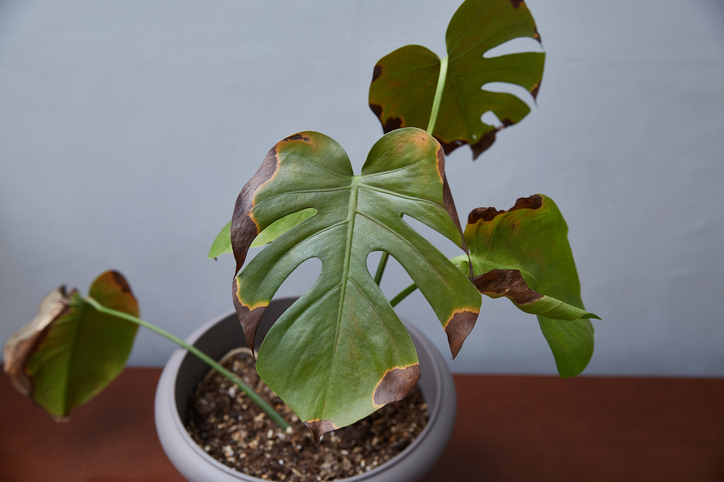


Summer sun can be just as harsh on your houseplants as it is on your skin. If your plants have recently been moved to brighter spots or are near a window to soak up all that glorious vitamin D, it’s worth checking in weekly to catch early signs of stress.
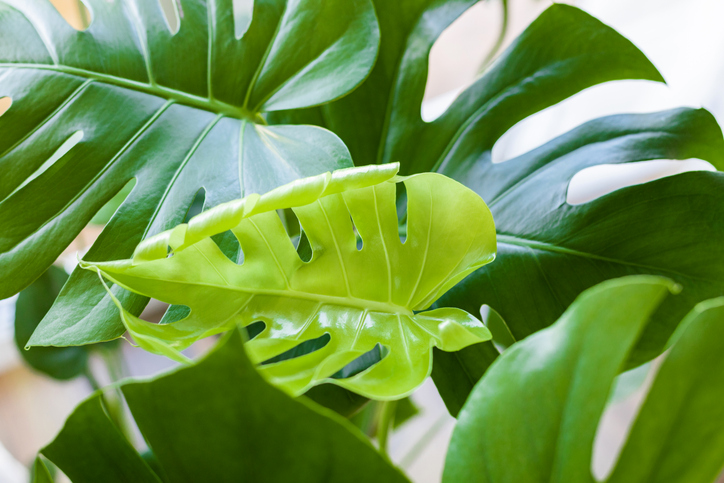
Get to know what “healthy” looks like
The best way to notice when something’s wrong? Get familiar with your plant’s baseline. A quick weekly check-in will help you catch early signs of stress before they turn into bigger problems. That means fewer dramatic rescues—and happier plants overall.
Look for the signs
Here are our general tips on how to spot the difference between sun damage and water issues, so you can treat the problem before it gets worse.
Sign #1: Crispy, charred patches
If a plant goes from low light to direct sunlight (more than 4 hours a day) without time to adjust, its leaves can scorch. The result? Blackened, crispy spots—especially on thinner leaves like Monstera or Calathea.
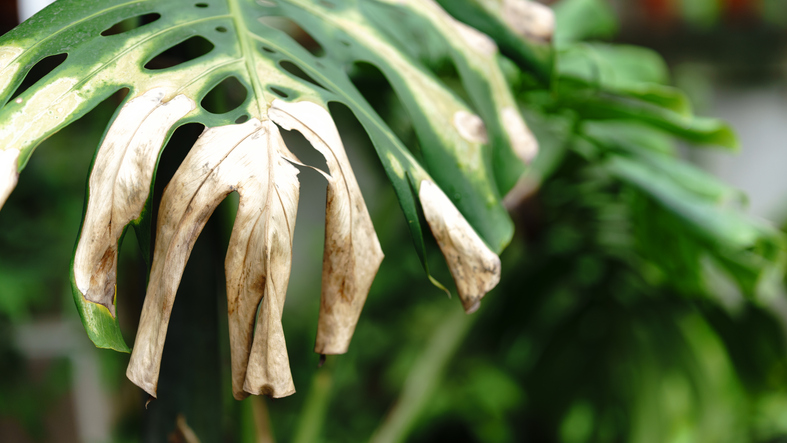
These marks mean the leaf cells have dried up and died. They won’t heal, but trimming away the damage and moving your plant to gentler light will help it recover.
Sign #2: Faded or washed-out leaves
This one’s more subtle. If your plant is slowly introduced to brighter light but still getting a bit too much, the foliage may turn pale or faded green. You’ll lose those lush, deep tones your plant normally has.
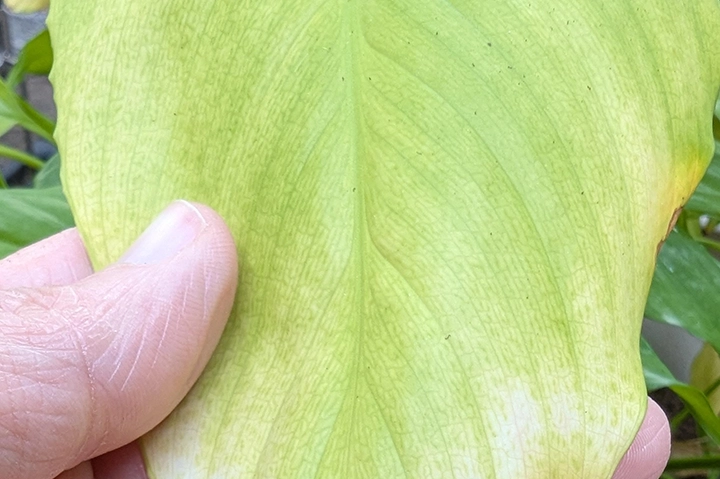
This is your early warning sign. Move your plant a little further from the window or filter the light with sheer curtains before damage sets in.
When it’s not the sun, but actually water troubles
Sun damage can be confused with watering issues, so it’s important to understand both.
Too much water causes black or brown spots that are soft and mushy—not dry. These spots may look like burns, but feel hydrated to the touch.
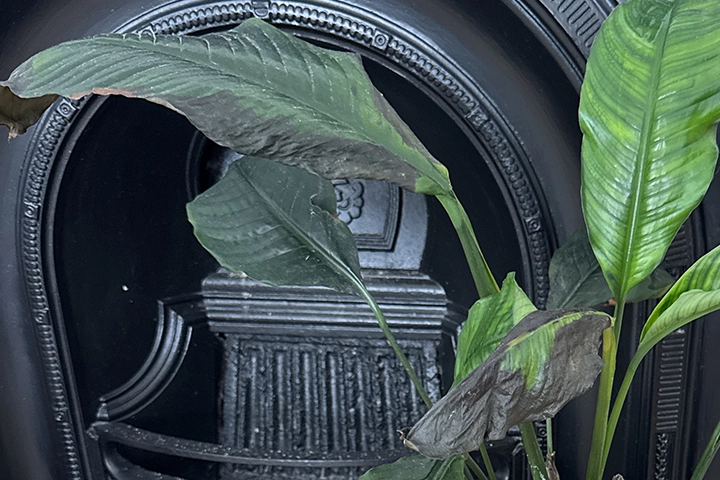
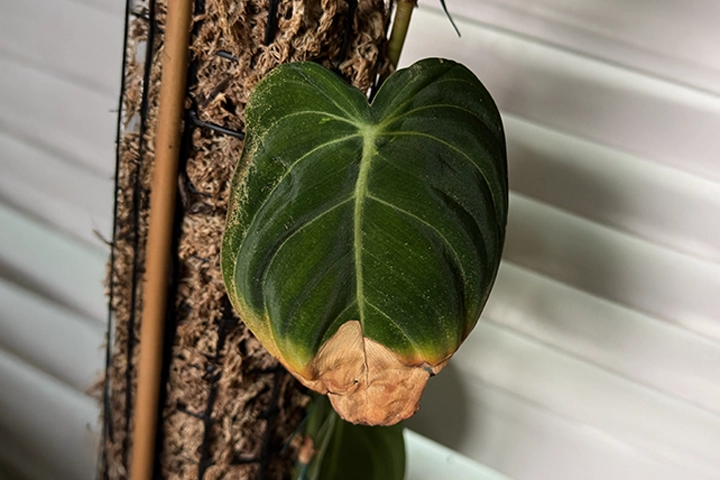
Not enough water will lead to browning that looks dry and crinkled—but not crispy. Think soft, shrivelled tissue, not brittle leaf edges.
Final tip: Observe, don’t panic
Plants are surprisingly resilient. Not every brown patch is the end of the world, and most plants bounce back when the issue is caught early. Think of summer as a time to dial in your care routine and get more confident reading your plant’s signals.


