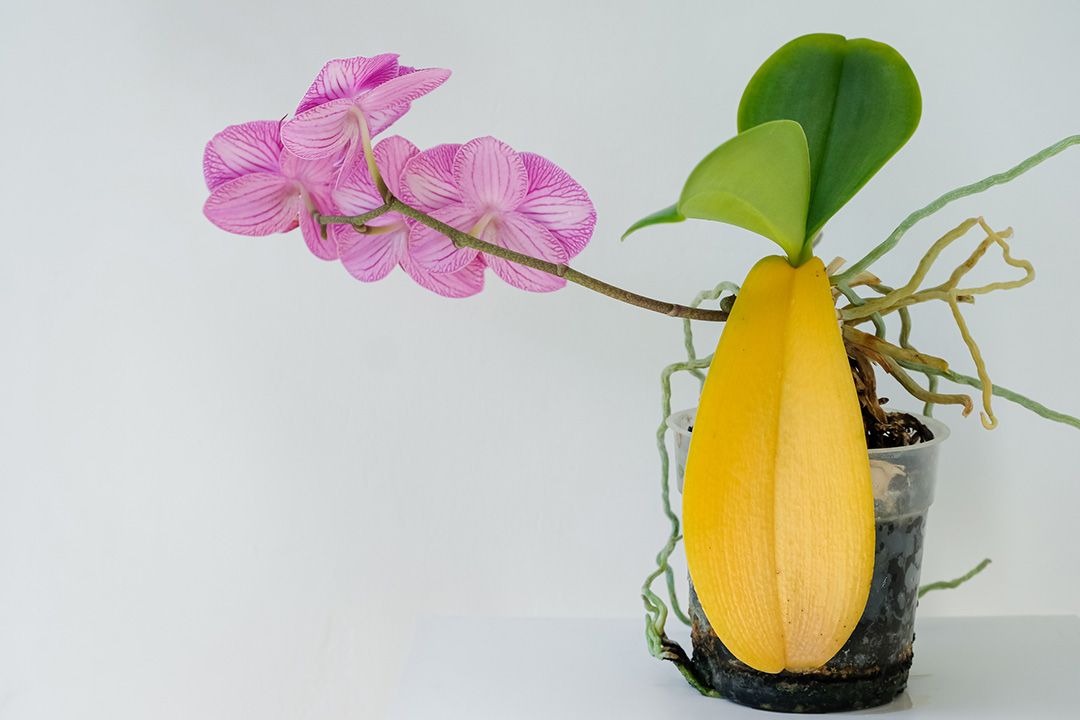


Most common “gift orchids” are Phalaenopsis, or more commonly moth orchids. They’re epiphytes, which is a fancy way of saying they naturally grow on trees, not buried in soil. Their roots are designed to be in the open air, grabbing moisture and oxygen whenever they can.
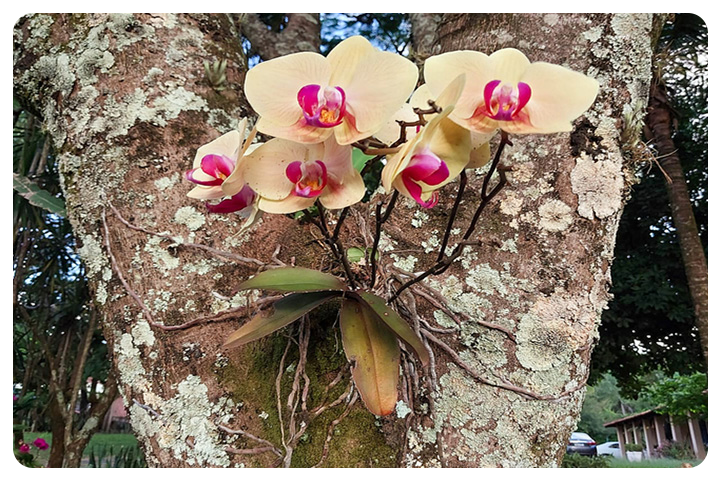
Translation: Most orchids want airy roots, not a swamp. The choice of potting mix is often the cause for yellowing leaves, limp foliage, root rot, and the “my orchid is dying” panic.
Poor soil; the supermarket orchid trap
A lot of store-bought moth orchids arrive:
- Cramped in a tiny pot
- Packed tight with sphagnum moss
- Often sitting in a decorative “no drainage” sleeve
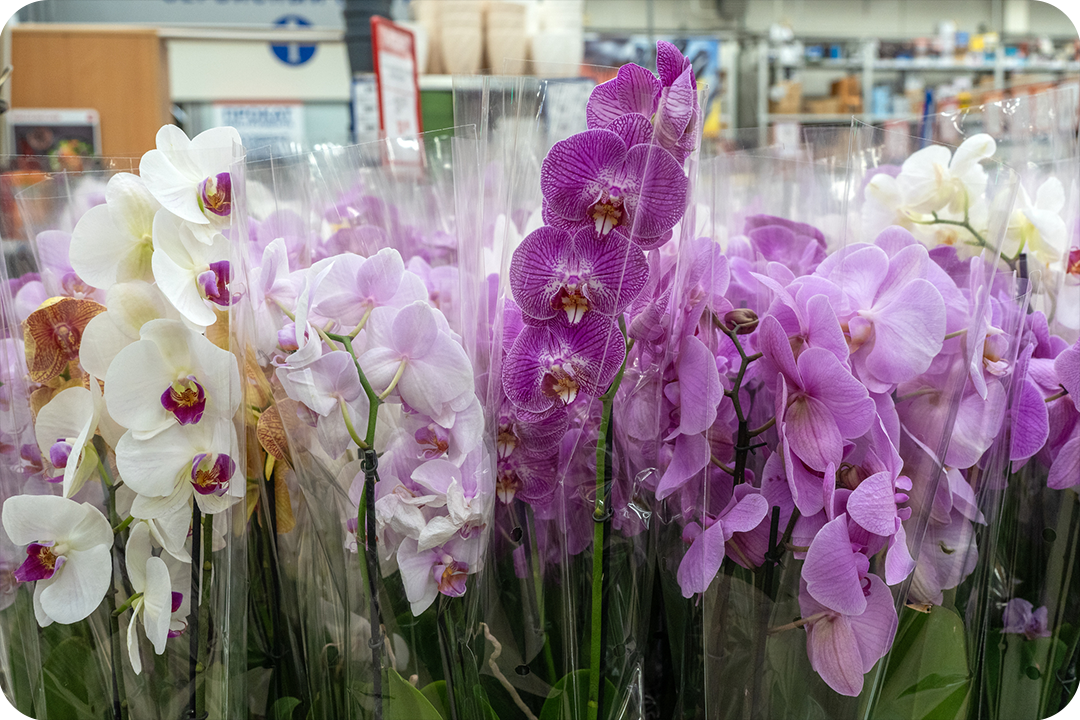
That setup can work in a warm, humid greenhouse with bright light and regular feeding. But the second it hits the real world (trucks, warehouses, shop floors, then your kitchen bench), the plant’s conditions change hard.
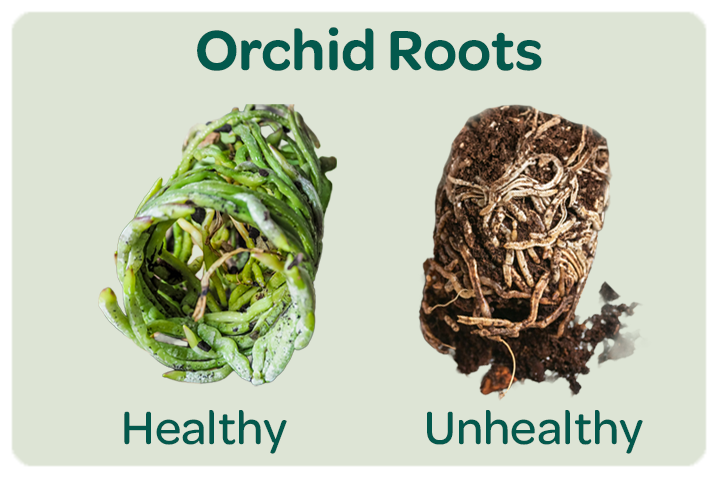
Those chunky grey-green roots you see are not just there for aesthetics. They’re the plant’s lifeline, and they need airflow to stay healthy. When roots stay wet with no breathing room:
- They suffocate
- They rot
- The plant can’t drink properly
- Leaves start yellowing or collapsing because water can’t move through the plant
So yes, an orchid can look “wet” and still be thirsty. Brutal.
What to do: repot (yep, even if it’s flowering)
The best rescue move is a repot into something that actually matches how orchids live.
- Remove from the pot (and any decorative sleeve)
- Gently peel away sphagnum moss as much as you can
- Trim dead roots
- Rotten = mushy, brown/black, hollow
- Healthy = firm, green when wet, silvery when dry
- Let roots air-dry for about an hour
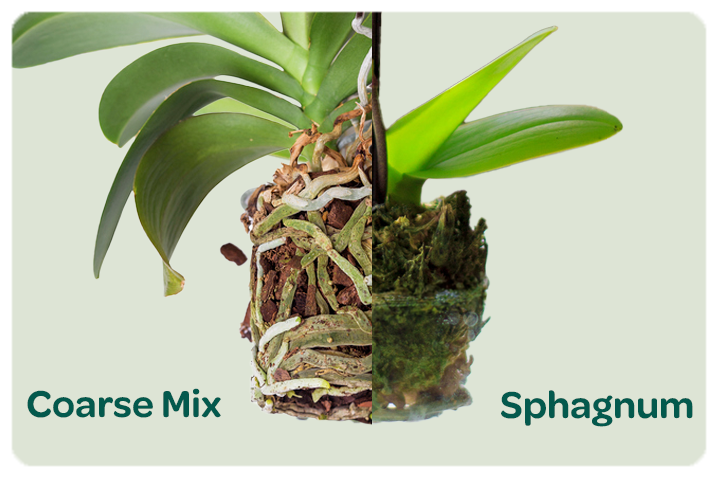
- Repot into a chunky orchid mix
- Mostly pine bark
- Add perlite for extra airflow
- A small amount of moss is fine, but it should not be packed tight
- Water only when the mix is almost dry
Should you keep the flower spikes?
If the orchid is stressed (bad roots, yellowing, floppy leaves), cutting the flower spikes can genuinely help.
Growing flowers is expensive for a plant. Think of it like this: If your body has a nasty flu, you don't run a marathon.
Environment factors causing stress
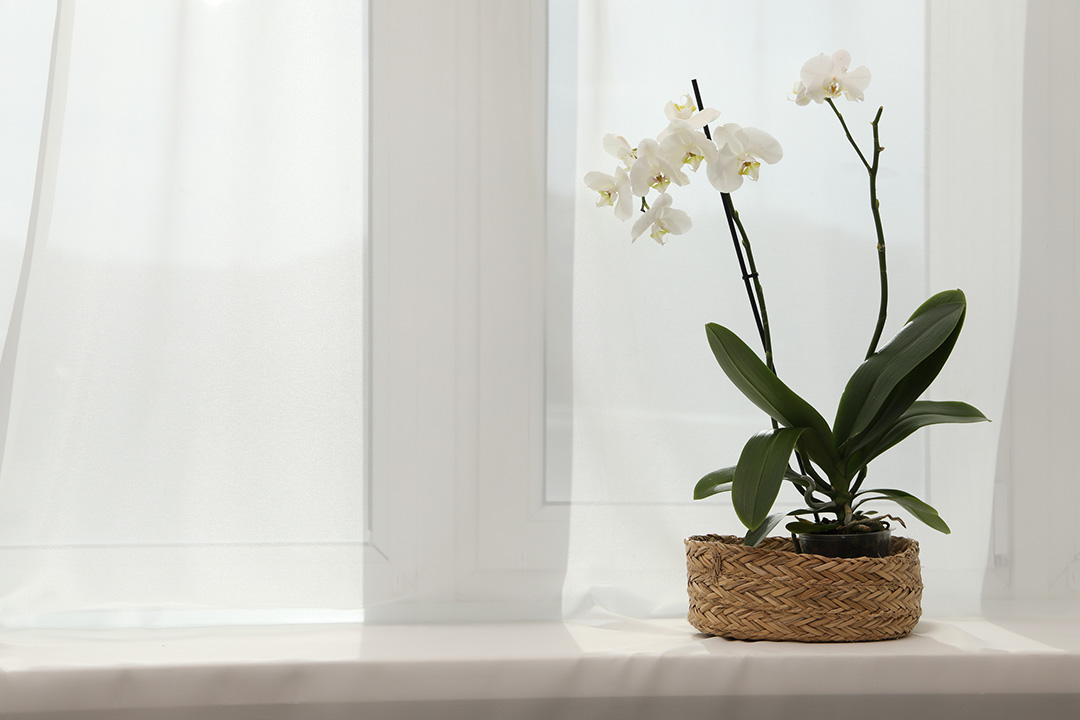
Orchids grow epiphytically in forest understory where they bathe in filtered light (medium to bright-indirect light). Your orchids leaves will burn and turn yellow if exposed to harsh direct sunlight.
To fix, place your plant in a place that receives sufficient indirect light and if placing on a windowsill, ensure a sheer curtain or blind diffuses the intensity.
These tropical plants also love humidity (40-70%) and typically your home just isn’t moist enough for them to thrive.
Make a tray by filling a shallow dish with stones or pebbles and fill it with water. As the water evaporates, your plant can soak up the moisture. Alternatively, use a humidifier to give your orchid the boost it craves.
Why are my orchid flowers falling off?
You didn’t do anything wrong. Orchid blooms are meant to be a seasonal flex, not a permanent lifestyle. Many bloom roughly once a year, and they usually need a cue.
Phalaenopsis often initiate spikes when the days are shorter and nights cooler.
If reblooming is the goal:
- Shorten your grow light window a bit
- Ease back on constant warmth
- Keep the plant in bright, indirect light and steady care
Recap
Your orchid is not failing because the flowers drop. That’s the plant completing a normal cycle. Your job is to keep the roots happy, and the blooms will come back when the plant’s ready to show off again.


