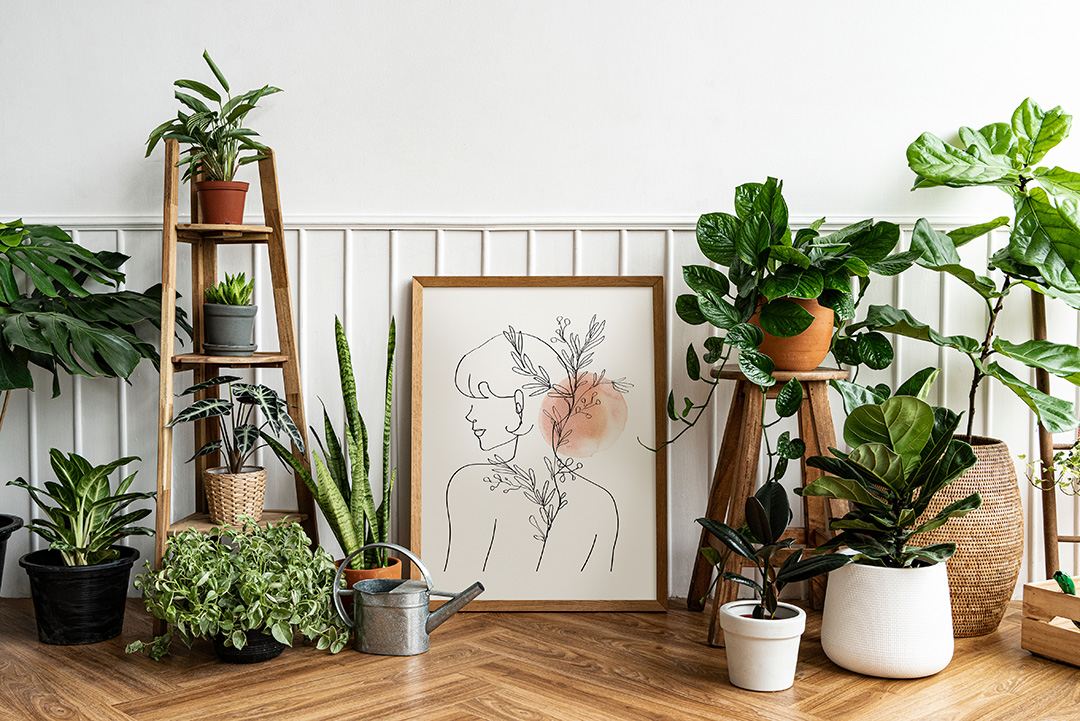


Told yourself 2022 was the year you were going to take better care of your houseplants? Now looking for some great tips to keep your indoor plants thriving and happy?
Look no further, we’ve put our collective heads together to provide 30 short and sharp pointers.
Watering Your Plants
- Drainage holes, please have them 🙏 A grow pot inside your décor planter is the way to go.
- Overwatering is typically a result of frequency not the amount of water.
- It’s better to under-water than over-water.
- Water until excess runs out to ensure all the roots are well-watered and to flush out any soil build up.
- Allow the plant to fully drain and always tip away the excess water sitting in the saucer.
- Water with tepid water, preferably in the cool of the morning.
- Seasons are important to your indoor plants. Reduce watering in the cooler winter months as your plant enters dormancy and takes longer to dry out.
- Avoid watering the foliage of your plants to reduce the risk of fungal issues.
Plant Conditions
- Pick plants that are suited to your home environment, particularly levels of light.
- Again seasonality. You may need to move plants out of intense direct light in summer and closer to sources of light in the winter (be mindful of too cold windowsills)
- Don’t move plants too frequently, allow them to acclimatise to new conditions first. This is particularly true for younger plants and plants just taken home from a nursery.
- Wipe down any dust or build up on your leaves to allow plants to breathe and better photosynthesise.
- Quarter rotate your plants every so often to avoid them growing to the sun and looking leggy.
- Believe it or not plants also follow a circadian rhythm which means it’s essential to provide them with hours of darkness to rest and metabolise the energy absorbed during the day (no more than 16 hours of light).
- To increase your humidity for your beloved tropical plants, place leca or pebbles and water into a saucer under your pots. You can also huddle plants together to create a microclimate, place wet sphagnum moss between your pot and cover planter or make use of regular misting or a humidifier.
- Try and keep your plants out of the direct path of air-conditioning and heating units.
Fertiliser and Pests
- Different plants need different fertilisers. Check what your plant prefers first.
- Fertilising is important during the warmer months (growth period) but not necessary in the cooler months (dormancy)
- Remember to check for pests thoroughly when you water. Much better to catch it early.
- For spider mites and other sucking or chewing insects, make use of Mavrik. Neem oil is your best bet for thrip, mealybugs, fungus gnats and aphids. Please dilute according to instructions.
Soil, Repotting, and Propagation
- Repot when the plant roots begin to grow out the bottom of your pot or the pot can no longer support the size/weight of your plant.
- Only repot to a pot 20% bigger than its current size. Any bigger and the new soil will retain too much moisture than your roots can take, essentially drowning them.
- Try and repot during the warmer months (preferably start of spring) when your plant will grow to fill the new pot.
- Your type and quality of soil is important. Don’t skimp on good potting mix and make sure the medium is appropriate for your plant.
- Its better to have soil that is slightly too aerated than it is to have dense compact soil. Perlite and chunky orchid bark will help with oxygen flow in the soil. As will poking a few aeration holes into the surface with a chopstick or equivalent blunt object. This tip will also ensure water reaches all roots.
- Prune your plants to encourage new growth, increase airflow to your plant and overall maintain a tidy appearance. When pruning, cut above the node to prevent any rot/disease.
- Dead, decaying, diseased or otherwise marked foliage is a waste of your plant’s energy. Don’t be afraid to cut back.
- Take cuttings below the node (where the leaves meet the stem) to propagate
- When the roots of your propagation have reached 5cm (this may take a month or so), you can pot them.
- Remember to water your transplant thoroughly for the first couple of weeks
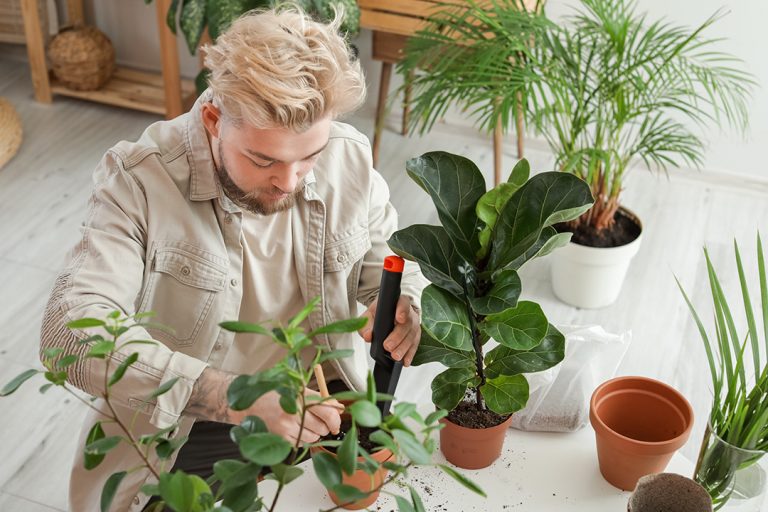
Hopefully these top tips for indoor plants will make your life easier and see an improvement in your plant care.


