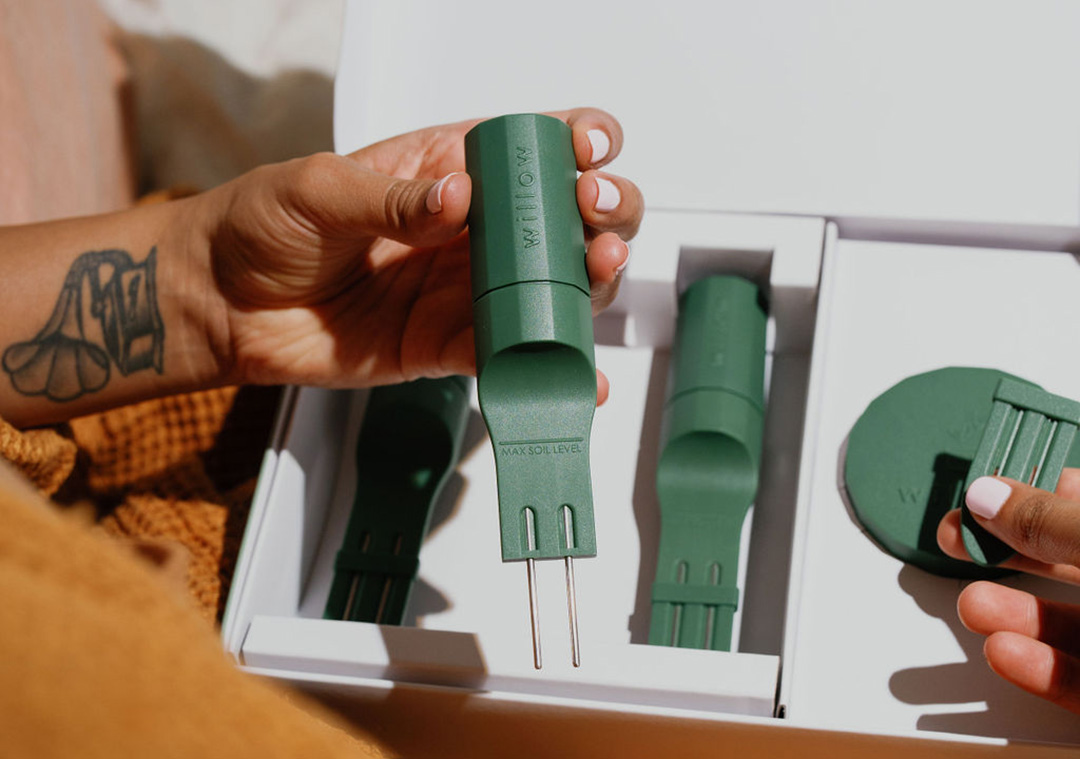


Willow Sensors are built to last – but like any device, they still need to be handled with care. A good rule of thumb? Before you water or care for your plant with your Willow Sensor still in, ask yourself: would I do this with my smartphone? If the answer is no, it's a sign you should handle your Sensor with the same care.
Here’s a quick read on the features we’ve built into our Sensor that makes it both efficient and high-quality, and how to get the most out of your hardware.
Max Soil Level Guideline
Above your Sensor’s exposed soil moisture prongs is a marked line with type etched underneath: Max Soil Level. It’s important to not insert the Sensor into your potted soil any further than this line.
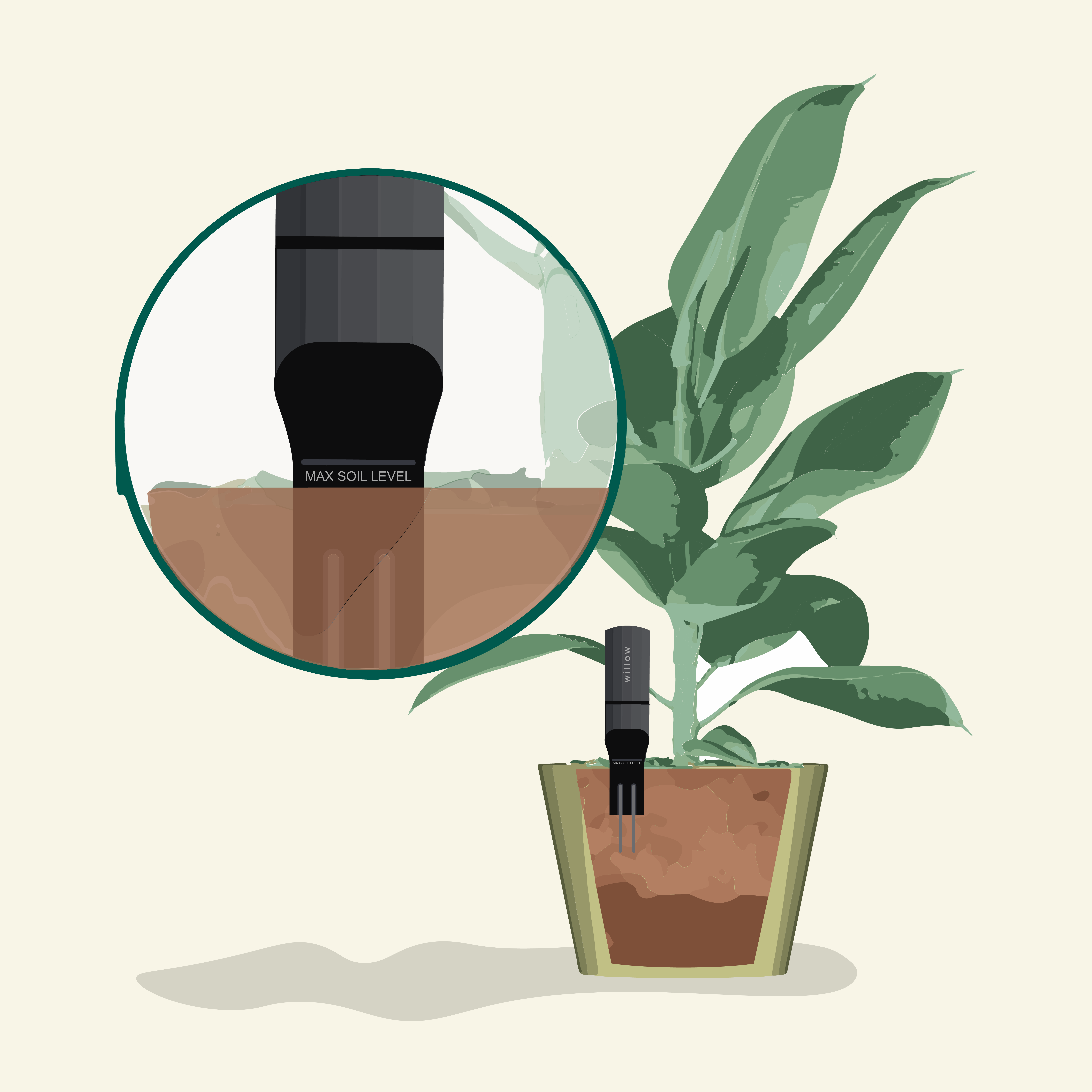
Planting the Sensor just below this line allows for sufficient space between the soil and the back ventilation.
If you peek underneath the curve of the top half of the Sensor, you’ll spot the vents that help the Sensor measure humidity and temperature conditions. These vents allow air to flow safely in for the Sensor to take accurate readings without damaging the tech inside.
Planting the Sensor past the Max Soil Level line interferes with these environmental readings and risks water damage when watering your plant. Which leads us to our next (very important) tip…
Watering with your Sensor
When it’s time to water your plant, best to take the Sensor out. Post-watering, you’re safe to plant it back in.
The tech inside the Sensor has been carefully safeguarded to limit water damage and the Sensor is certified splash-resistant – but no tech product is 100% immune to water damage.
Willow advocates for a thorough watering of your plant to allow water to reach every crevice of your soil and have your roots growing deep and strong. This likely involves a drenching from the shower, tap, watering can or outdoor hose. While your plant will love the watering, your Sensor’s electronics…? Not so much.
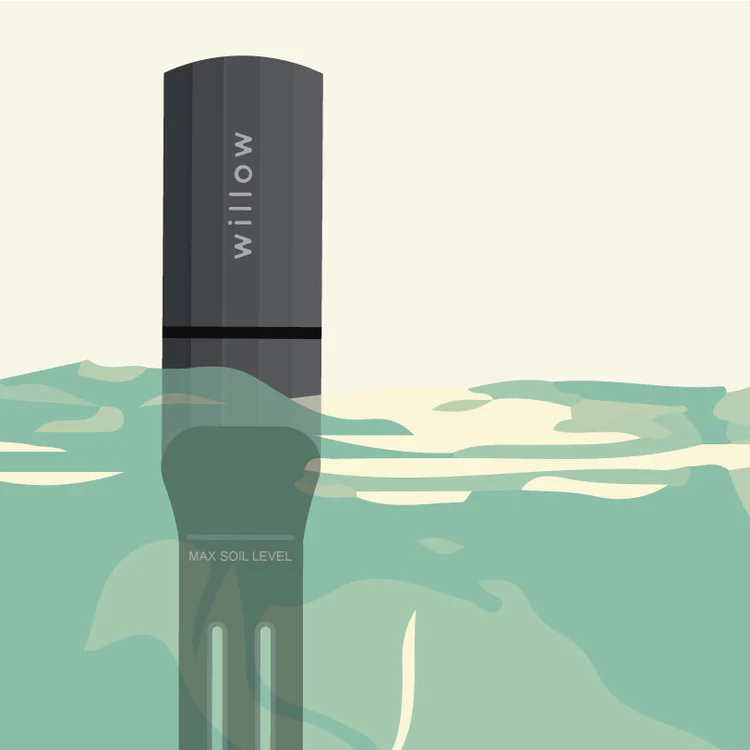
Just like your phone, your Sensor should never be submerged in liquid.
Light Pipe
The clear pipe on the top half of your Sensor is what we call the Light Pipe (creative name, we know). This feature funnels ambient light to the onboard light sensors stored inside the Sensor and measures light exposure against your plant’s preferred light levels.
If you crouch down to your plant’s level, then even further to the Sensor level as it sits in the soil, your view of the sky (or artificial light source, if you’re using that) is what the Sensor’s light pipe is scanning and recording. It’s important these views are as close to each other as possible with your light pipe facing the source of light.
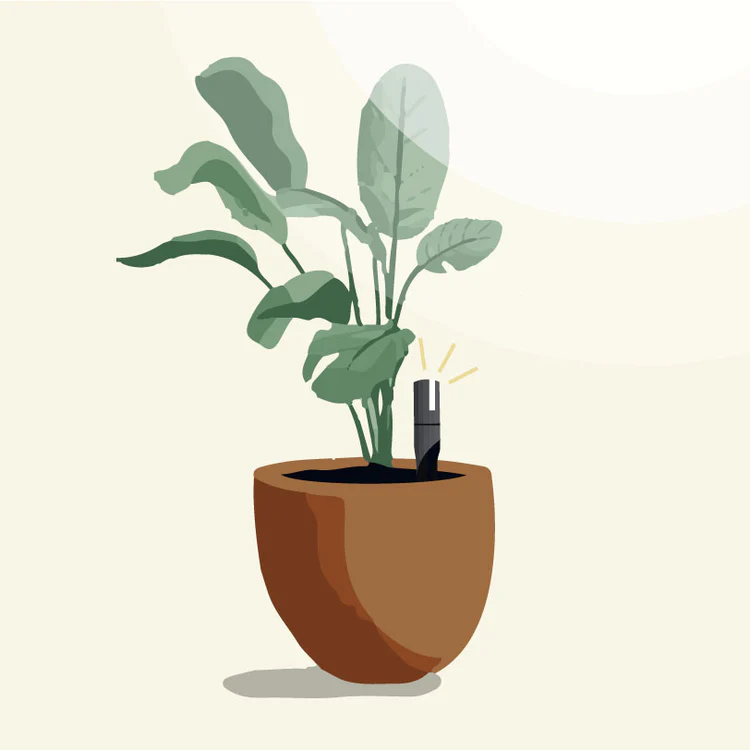
Make sure the light pipe is always facing where the light is coming from.
If your light pipe is instead facing towards a wall or obstructed by leaves or other objects, your light readings and alerts will be impacted. For mature or bushier plants, a Large Pot Extension can provide additional height.
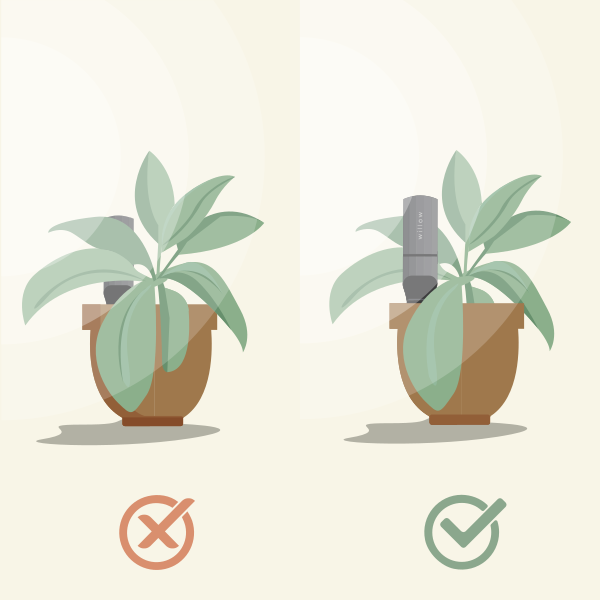
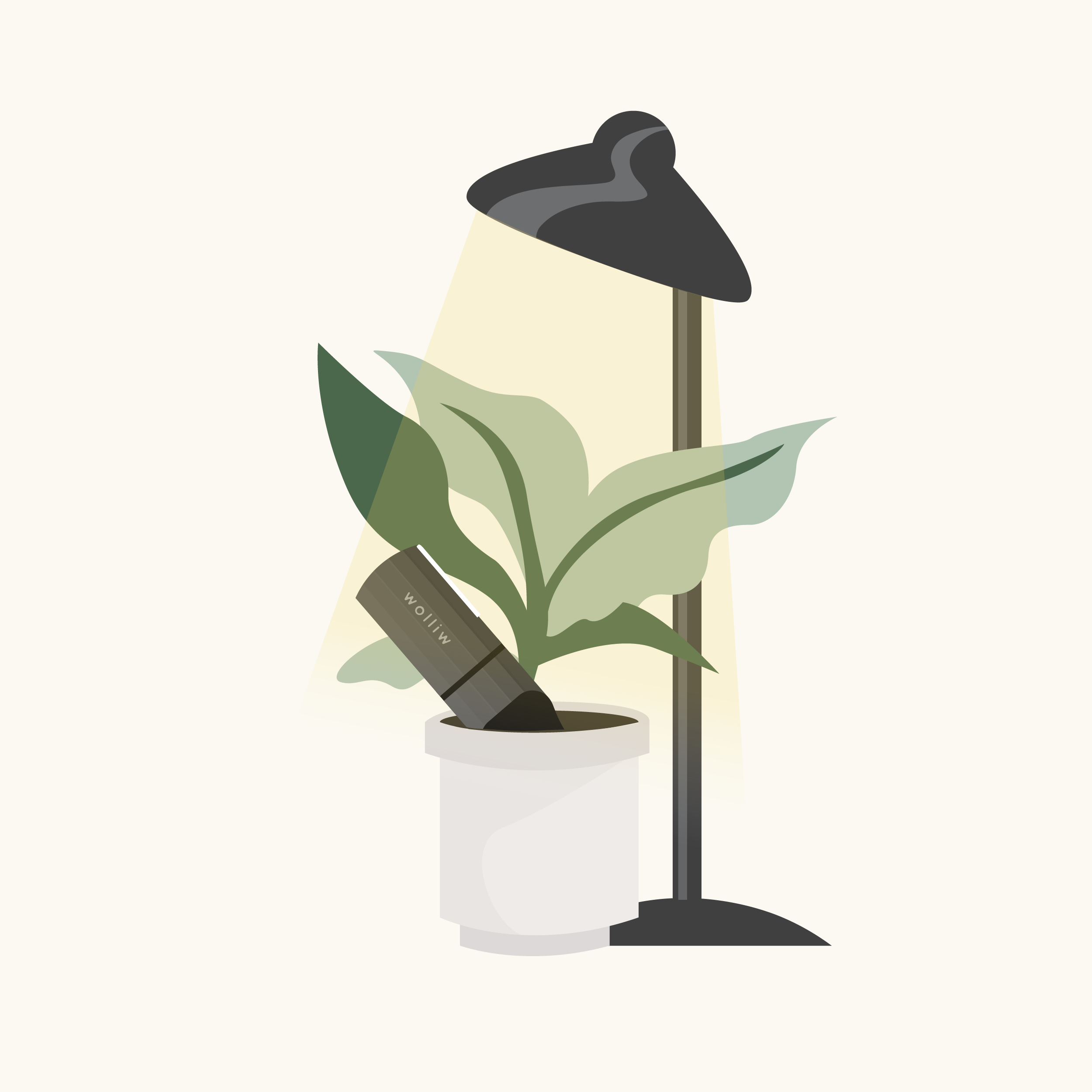
Lastly, houseplants typically receive directional light through windows from the side. For those with grow lights positioned above the plant, we suggest angling your Sensor with the light pipe facing diagonally upwards, making sure the moisture probes are still fixed within the soil.