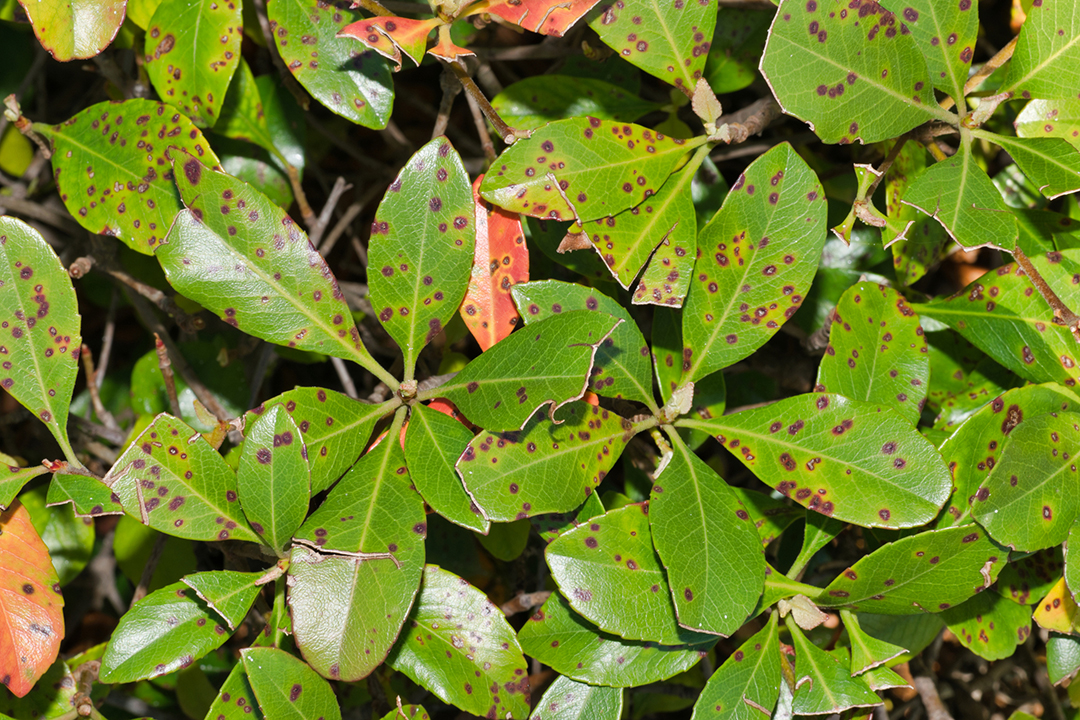


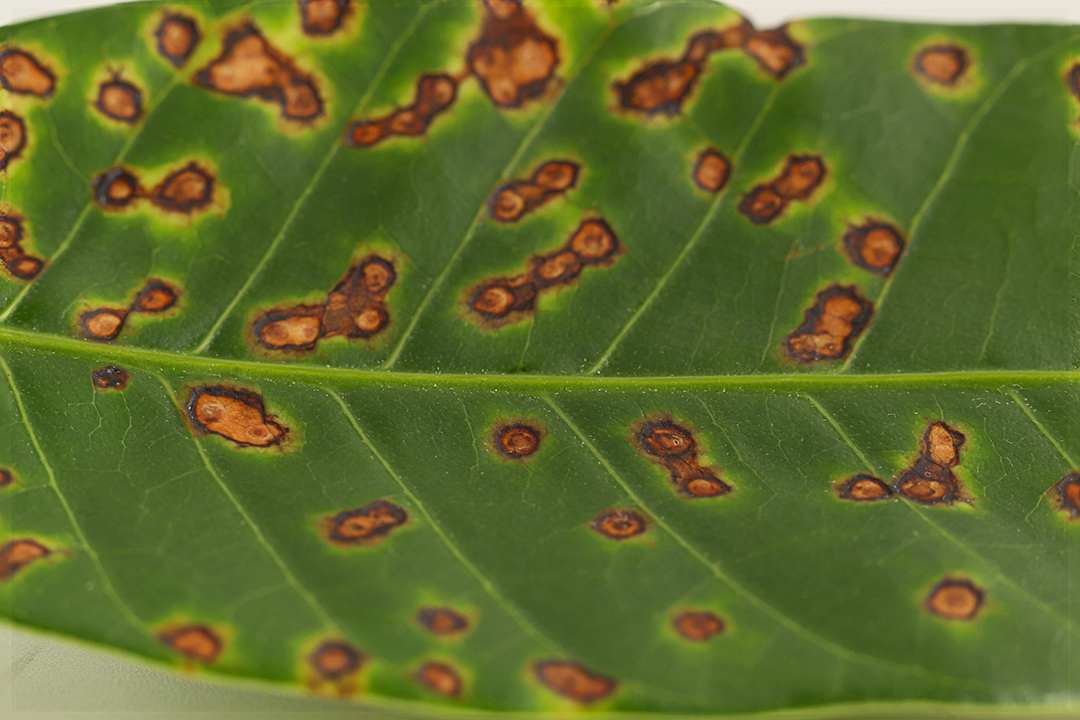
Leaf spot is a common infection of houseplants that causes unwanted brown spotting, sometimes encircled by a yellow or reddish halo. It’s highly infectious and contagious, jumping from leaf to leaf to other plants.
What Causes It?
The most common cause lies with environmental factors - consistently high humidity coupled with poor ventilation. Overwatering, splashing water on the leaves and temperature fluctuations are also going to contribute to creating a breeding ground for bacteria and fungi.
How Do I Treat It?
The disease will spread slowly with the leaf turning brown and dying off at the necrotic spots – and eventually the plant will die. It’s important you act quickly, taking the following steps:
- Isolate the affected plant to prevent spreading to more of your beloved collection.
- Assess the damage: If it’s only a spot or two, skip to the next step. If it’s progressed considerably, prune and remove heavily affected leaves.
- Spray the affected plant regularly with neem oil or specific fungicides. It’s important to read the labels as some contain copper and other elemnts that your plant may not like.
- Monitor your plant to ensure the infection has stopped spreading and during this time, avoid getting the leaves wet.
Better Yet, How Do I Prevent It?
To prevent leaf spot from unaliving your plants, take these measures:
- Well-ventilated position: Good air flow around your plants is a must, especially during summers when it gets hot and humid. Crack a window, have a fan running nearby, and provide some breathing space between your plants.
- Know your plants: While some plants like your ferns enjoy high humidity and appreciate misting, many others won’t react well to being wet for periods, as this makes them more prone to infection.
- Water correctly: Avoid overwatering and leaving your plant and roots sitting wet for long periods.

