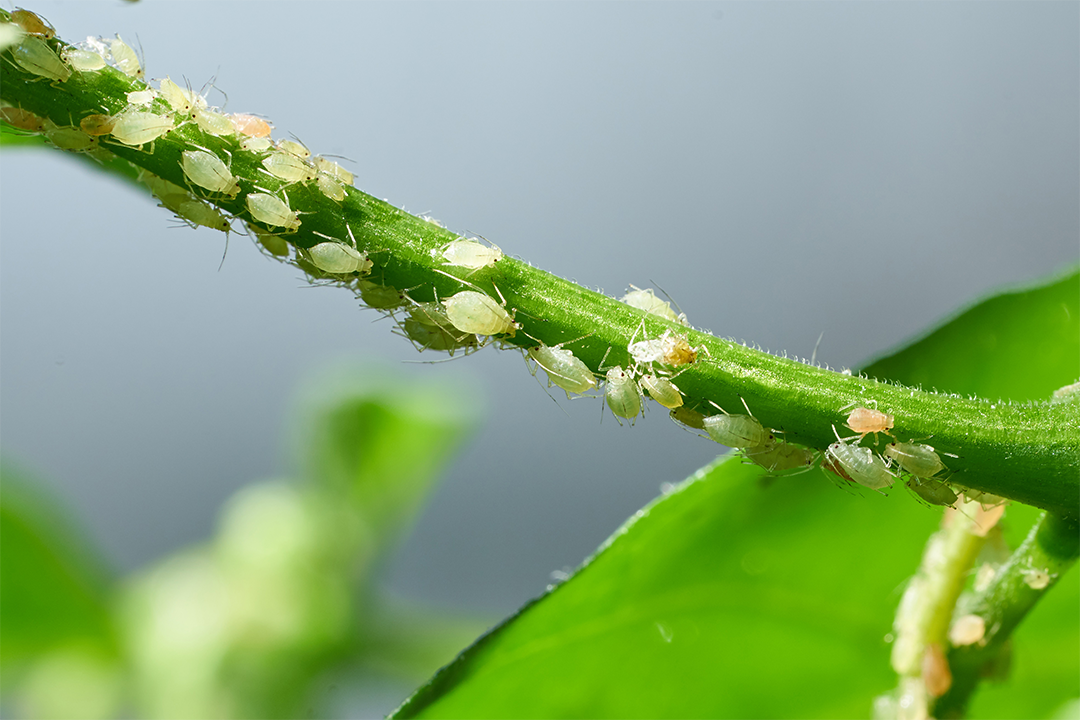


If you've spent some time with plants, indoors or out, you likely know that they share a relationship with insects. Insects rely on plants for food, shelter and prey so even indoors you can occasionally bring some creepy crawlies home with you. Many of which can do significant damage to your new plant and worst-case scenario spread around to other plants around your home.
Identifying plant pests
Most of the time you won’t know that your plants have pests until they have done a fair bit of harm to the foliage. Although some insects like Scale bugs display on the petioles and stems of plants like small barnacles.
Some things to look out for on your plants:
-
Yellow spots all over singular leaves, these spots are quite small so from afar it can just look like a leaf is turning yellow.
-
Tiny webs over the leaf surface, in between veins or surrounding the leaf sinus.
-
Pale or discoloured sections on the leaf surface.
-
Lots of little white spots looking like miniature grains of rice clustered in certain areas of the leaf
-
New leaves coming out deformed or failing to grow at all.
-
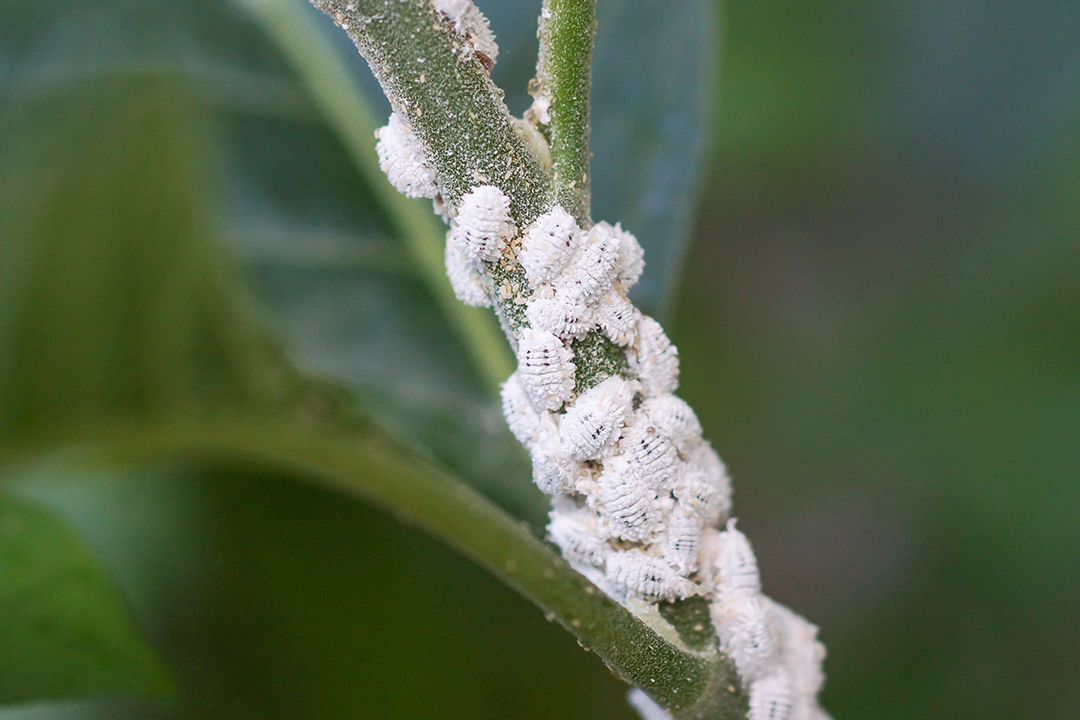
White fluffy around stems and on the undersides of leaves.
Plant Pest Solutions
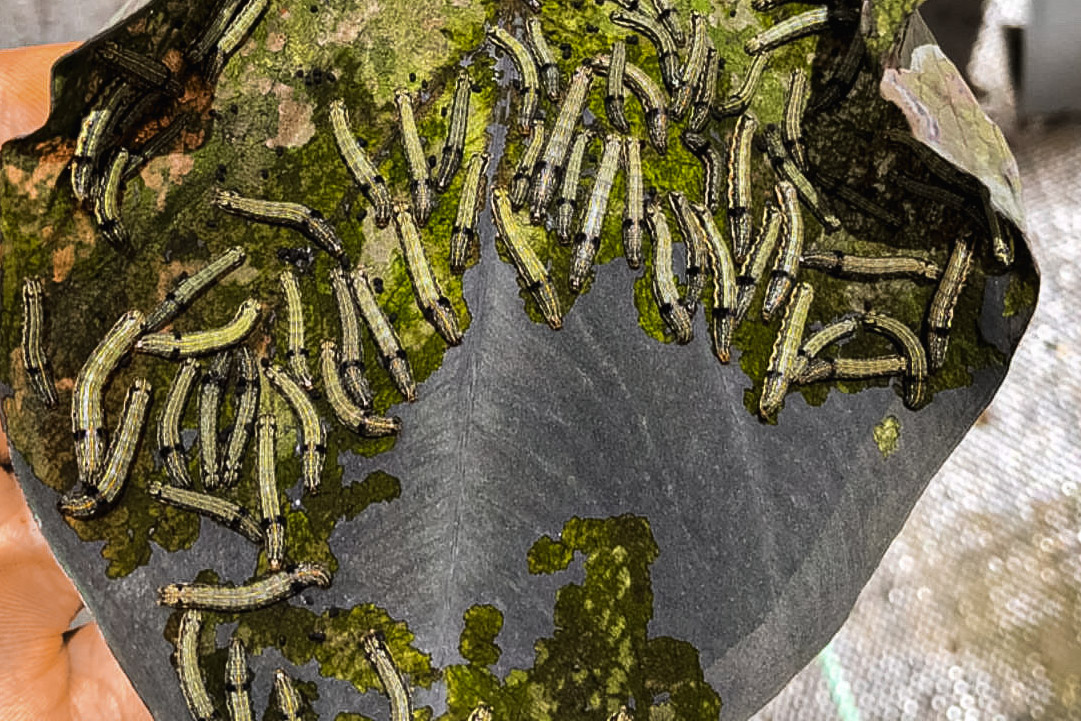
Obviously one of the best solutions when it comes to pests are to have in place preventative measures. Spraying your plants with organic pesticide at least once a month can assure you that pests are going to be deterred or won’t be able to reproduce on your plants. But if it’s too late and you’ve noticed one of your plants has an “infestation” then it’s time to act quickly!
First things first, you’ll want to move this plant away from any of the others in your home. This is known as isolating or quarantining and it ensures the pest won’t spread to other plants in your home. As long as they haven’t already, be sure to check over all of your plants after you notice large infestations.
Once you have your problem plant isolated you can start by taking it to the shower and giving it a solid water blast to dislodge most of the pests from the foliage, try to do this once your plant is dry or you may end up over watering it.
The next thing to decide is whether you’d like to go chemical or organic with your pesticide selection.
Chemical
Chemicals are available from most garden centres for example, Neem oil, Pyrethrum and White oil. Keep in mind that these chemicals will kill most insects and not just the ones you’re targeting. Ensure you don’t do more harm than good to your plants precious soil biome.
First you want to get an absorbent cloth and soak it in the preferred chemical, then proceed to wipe all of the leaves on your plant. Be gentle as not to rip them but somewhat firm to ensure you really wipe off all of the eggs and larvae that may be stuck to the foliage. Once you’ve wiped every leaf you can then douse the plant by spraying it’s stems and petioles afterward, this ensures you haven’t missed a spot. Be sure to keep the plant isolated afterward until you can’t see any new pests on it.
Organic
There are a few different organic methods of dealing with pests, the first of which you can make at home using a few key ingredients; Get 2 – 3 garlic cloves and dice them up finely (unlike in life, this is not one of those times where more garlic is better). Dice up 10 small hot chilli peppers and place it all into roughly 1 ½ litres of water. Leave this out in the sun for a day to infuse and then strain it into a spray bottle. Beware! It’s quite potent and will harm seedlings and young plants. Make sure to patch test your spray on a leaf or two before dousing any plants. But it’s extremely effective at removing pests and works on practically all insects.
Secondly you can release predatory or beneficial insects onto the heavily effected plants, this is only suggested for bad infestations but can be positive for people who do not want chemicals in their home. You can buy beneficial insects online but if you want you can catch and release lady bugs, they are ravenous when it comes to eating mealy bugs, aphids and most of the common plant pests.
Last but certainly not least. You can buy yourself a Willow sensor and make sure that the plants in your home are being cared for appropriately, plants which are experiencing poor conditions will release pheromones that pests are actually attracted to. The plants become weak and therefore pests can easily take over while the plant is unable to put up any sort of fight, so ensuring your plants are happy and healthy can be one of the best ways to deter common houseplant pests.


