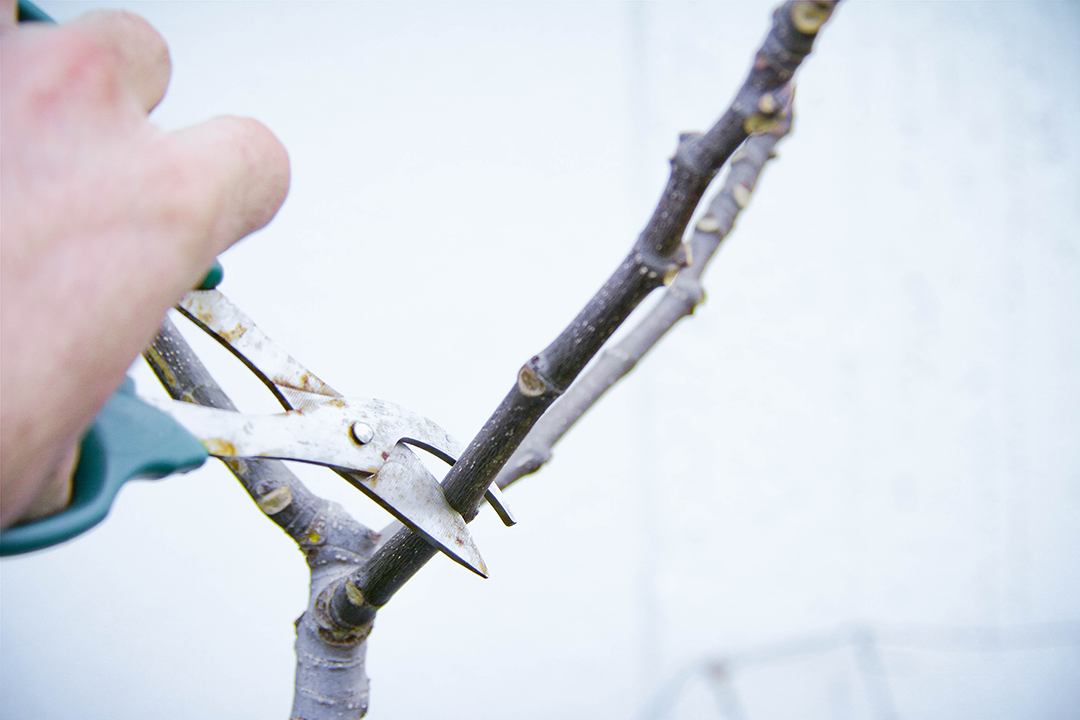


This knowledge is not essential, but it can be handy if you plan on taking regular cuttings from your plants and especially if you want to start pruning the trees or shrubs around your property. Make sure your tools are clean before you take cuttings from any plant, do this by washing your scissors or secateurs under hot water and use soap if they are really dirty.
Professionals wash their secateurs in methylated spirits so if you have this available at home, it can be good to stop any spread of disease or fungus.
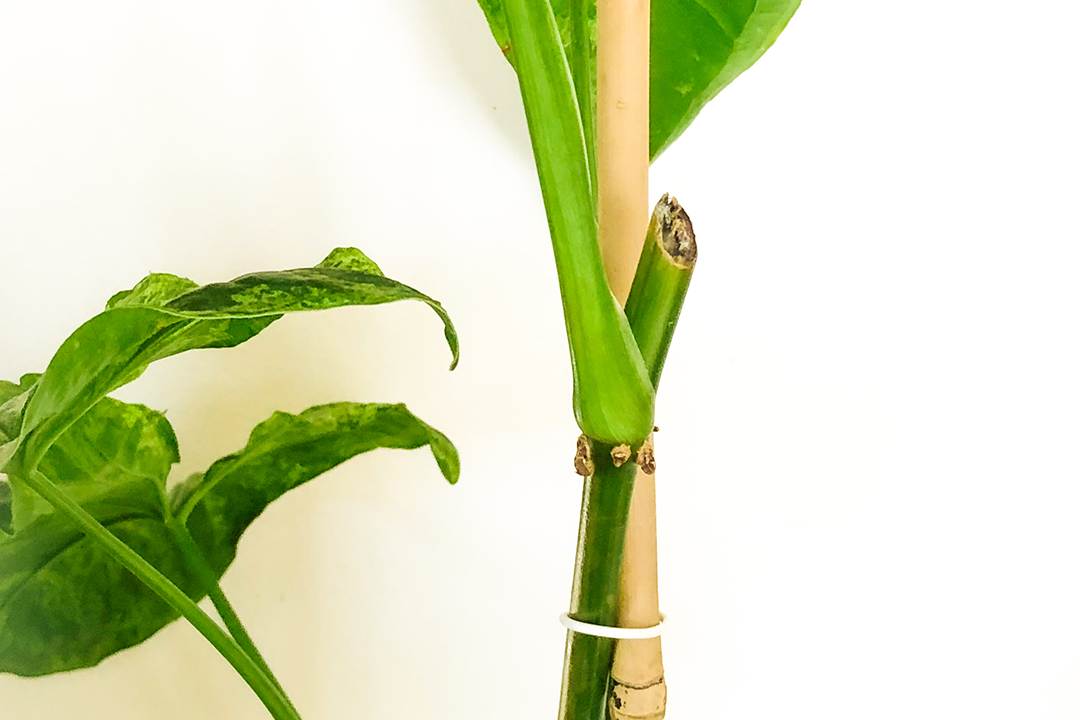
Once you've identified the limb you plan to remove, you want to cut back to the nearest node and avoid leaving much internode behind. Once you have identified where the nearest node is, hold your secateurs on a 45-degree angle and cut off your tip. Leaving behind a pointed edge just before the node you left behind, this ensures no water will sit upon the open wound you’ve left behind and keep your plant happy and healthy!
Typically, a good cutting will contain four to six nodes, three of which you’ll often submerge in water or your preferred growing medium (soil, coir, perlite or moss.) Some plants like vines can be propagated with less nodes, experienced plant parents can use one node to create a new plant but for beginners it’s important to include more than a few. Increasing the potential to succeed in reproduction.
What is a node?
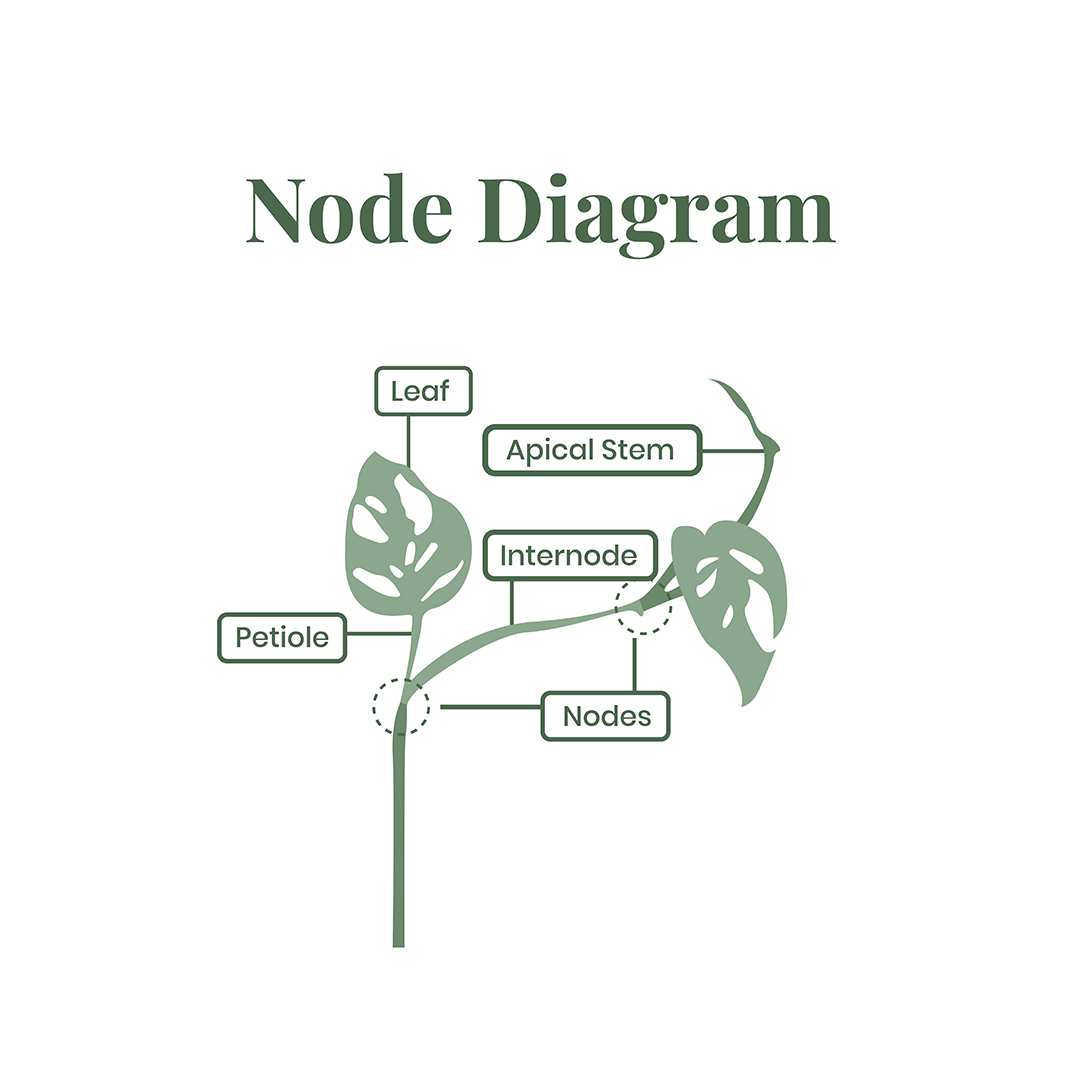
Wherever you can see a leaf has emerged from the stem, whether it be one leaf or many, this is a node.
As depicted in the diagram below, the space between these nodes is known as the internode. If you think about a plant’s stem much like a transit map, the internodes are the railway lines, and the nodes are the train stations. These nodes are predominantly where your roots will form, as most of the nutrients stored within the stem are transported here.